· Savvy Team
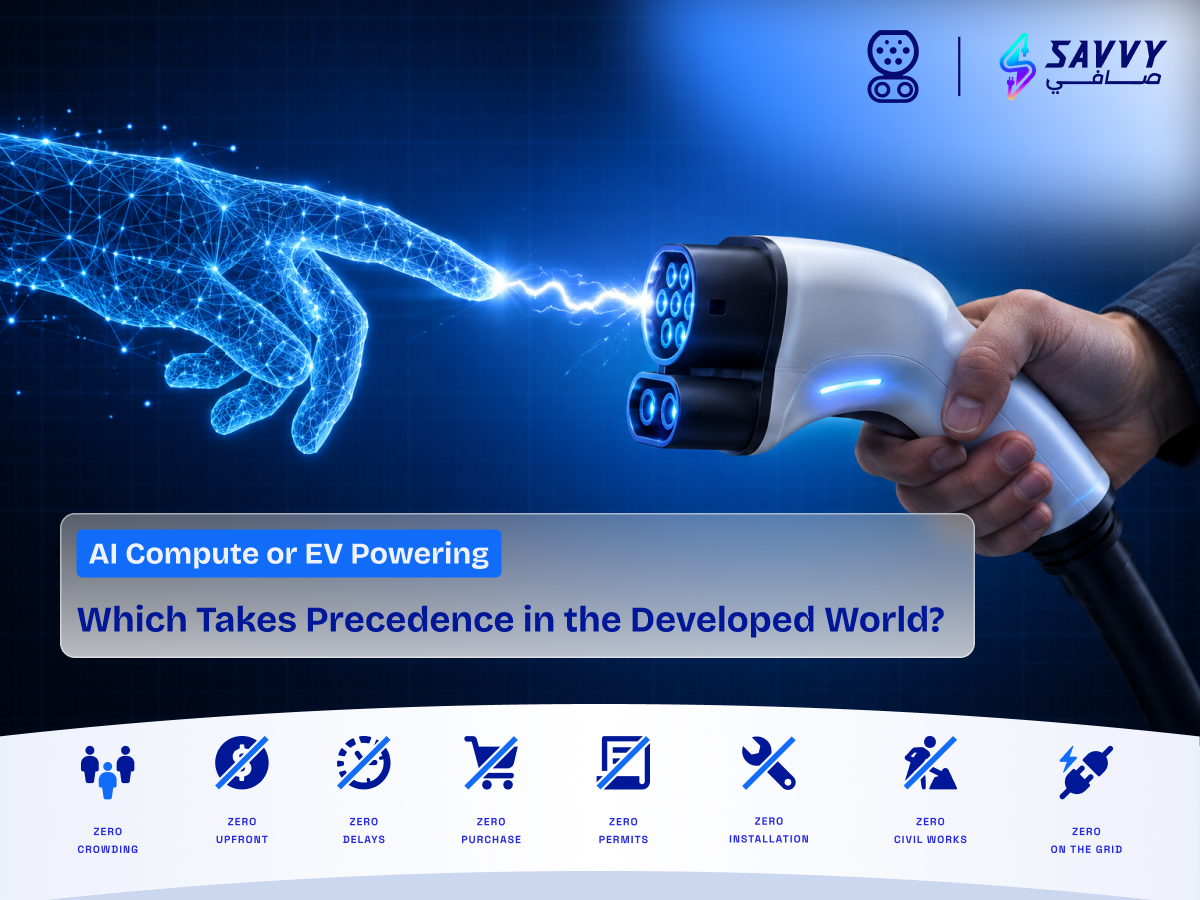
AI Compute or EV Powering: Which Takes Precedence in the Developed World?
AI data centres and EV charging are both racing to secure electricity, but the real bottleneck isn't generation — it's grid capacity. Here's why the future depends on smarter, more flexible energy infrastructure.
Introduction
Artificial intelligence (AI) and electric vehicles (EVs) are no longer separate technology trends—they are reshaping the global economy in parallel. AI is accelerating demand for hyperscale data centres that power everything from generative AI to advanced analytics, while EV adoption is expanding rapidly as governments, businesses, and consumers transition towards cleaner transportation. Despite serving different industries, both revolutions share one increasingly constrained resource: electricity.
This convergence is creating a new challenge for policymakers, utilities, and businesses. According to the International Energy Agency (IEA), global electricity consumption from data centres is expected to exceed 945 TWh by 2030, more than doubling current levels, with AI workloads accounting for much of that growth. At the same time, BloombergNEF projects continued growth in EV adoption throughout the decade, increasing demand for residential, public, and commercial charging infrastructure.
The debate, therefore, should not focus on whether AI or EVs deserve priority. The more important question is whether electricity infrastructure can expand quickly enough to support both. As economies accelerate digital transformation and transport electrification simultaneously, grid resilience, energy flexibility, and infrastructure planning are becoming just as important as technological innovation itself.
Key Takeaways
- AI data centres are becoming one of the fastest-growing sources of electricity demand worldwide. - Commercial fleet electrification is accelerating alongside passenger EV adoption. - Grid infrastructure—not electricity generation alone—is emerging as the biggest constraint. - Distributed energy and battery-backed charging solutions are becoming strategic assets for businesses. - The future depends on modernising energy infrastructure rather than prioritising AI over EVs.
Electricity Has Become the World's Most Strategic Resource
Every industrial revolution has been powered by a defining resource. Coal enabled mechanised manufacturing, oil transformed transportation, and the internet reshaped global commerce. Today, electricity has become the foundation of nearly every technology driving economic growth.
Artificial intelligence, cloud computing, semiconductor manufacturing, battery production, electric mobility, advanced manufacturing, and smart cities all depend on reliable electricity. Unlike previous industrial transitions, these technologies are expanding simultaneously, placing unprecedented pressure on electricity systems that were designed decades before AI and large-scale electrification became policy priorities.
Research reflects the scale of this shift. The IEA estimates that electricity demand from data centres alone will grow by approximately 15% annually through 2030, significantly faster than overall electricity demand. Meanwhile, electrification across transport, heating, and industrial operations continues to increase pressure on national grids.
Consequently, electricity is no longer viewed simply as a utility service—it has become a strategic economic asset. Countries with resilient energy infrastructure are increasingly attracting investment in AI, advanced manufacturing, and clean technologies, while those constrained by ageing transmission and distribution networks risk slowing innovation and long-term economic competitiveness.
AI Compute Is Creating a New Era of Energy Demand
Artificial intelligence is often associated with software innovation, but its greatest infrastructure impact lies in the physical world. Every AI model relies on hyperscale data centres filled with thousands of specialised GPUs, networking equipment, cooling systems, and redundant power infrastructure that operate almost continuously.
Unlike conventional commercial buildings, AI facilities require stable, high-density electricity twenty-four hours a day. This continuous demand fundamentally changes how utilities forecast electricity consumption and plan future infrastructure investments.
The pace of growth is significant. Goldman Sachs Research estimates that global data centre electricity demand could increase by approximately 160% by 2030, driven largely by AI adoption. Several hyperscale campuses are already requesting electricity measured in hundreds of megawatts, with future developments expected to approach gigawatt-scale capacity.
For governments, AI has therefore become more than a technology initiative—it has become an energy planning challenge. Attracting AI investment increasingly depends on modern transmission infrastructure, reliable substations, renewable energy integration, and faster grid expansion. Access to electricity is rapidly becoming as important as access to talent, capital, or semiconductor supply chains.
EV Electrification Isn't Slowing Down
While AI dominates technology headlines, transport electrification continues to gather momentum across developed economies. Governments remain committed to reducing transport emissions through stricter regulations, investment incentives, and nationwide charging infrastructure programmes. At the same time, businesses are accelerating fleet electrification to reduce fuel costs, improve operational efficiency, and meet sustainability targets.
This transition extends well beyond passenger vehicles. Logistics companies, municipalities, airports, ports, mining operators, and construction firms are increasingly deploying electric commercial vehicles as battery technology improves and total cost of ownership becomes more attractive.
However, successful fleet electrification depends on more than purchasing vehicles. Businesses require scalable, reliable charging infrastructure capable of supporting day-to-day operations without disrupting productivity. As a result, many organisations are investing in commercial EV charging solutions that can accommodate future fleet growth while integrating with broader energy management strategies.
Rather than representing a slowdown, commercial electrification is creating sustained demand for resilient charging infrastructure that can evolve alongside increasing electricity requirements.
The Real Bottleneck Isn't AI or EVs—It's the Grid
The growing debate around AI compute and EV powering often suggests that one industry must inevitably take priority over the other. In reality, the evidence points to a different conclusion.
The biggest constraint facing developed economies is not electricity generation—it is electricity delivery.
Across North America and Europe, utilities are experiencing record requests for new grid connections from AI data centres, manufacturing facilities, battery plants, and EV charging projects. While renewable generation continues to expand, many transmission networks, substations, and local distribution systems lack the capacity to deliver electricity where it is needed most.
Grid interconnection delays have become a significant challenge. In some regions, large industrial and commercial projects face waiting periods measured in years before receiving sufficient grid capacity. This creates delays for AI investment, commercial fleet electrification, and industrial expansion alike.
The implication is clear: AI and EVs are not competing against each other—they are competing against infrastructure timelines.
This changing landscape is encouraging governments and businesses to rethink traditional energy strategies. Rather than relying solely on conventional grid expansion, organisations are increasingly exploring distributed energy resources, battery storage, and flexible charging infrastructure that can reduce dependence on lengthy utility upgrades while improving operational resilience.
Why Distributed Energy and Off-Grid Charging Will Matter More
As governments work to modernise electricity networks, businesses cannot afford to delay their electrification strategies while waiting for grid capacity to catch up. Commercial fleets must remain operational, construction projects follow fixed timelines, and logistics providers cannot postpone deliveries because a utility upgrade is still pending.
This is driving growing interest in distributed energy systems that reduce dependence on traditional grid infrastructure. Technologies such as Battery Energy Storage Systems (BESS), microgrids, renewable energy integration, and intelligent energy management are helping organisations improve energy resilience while supporting electrification.
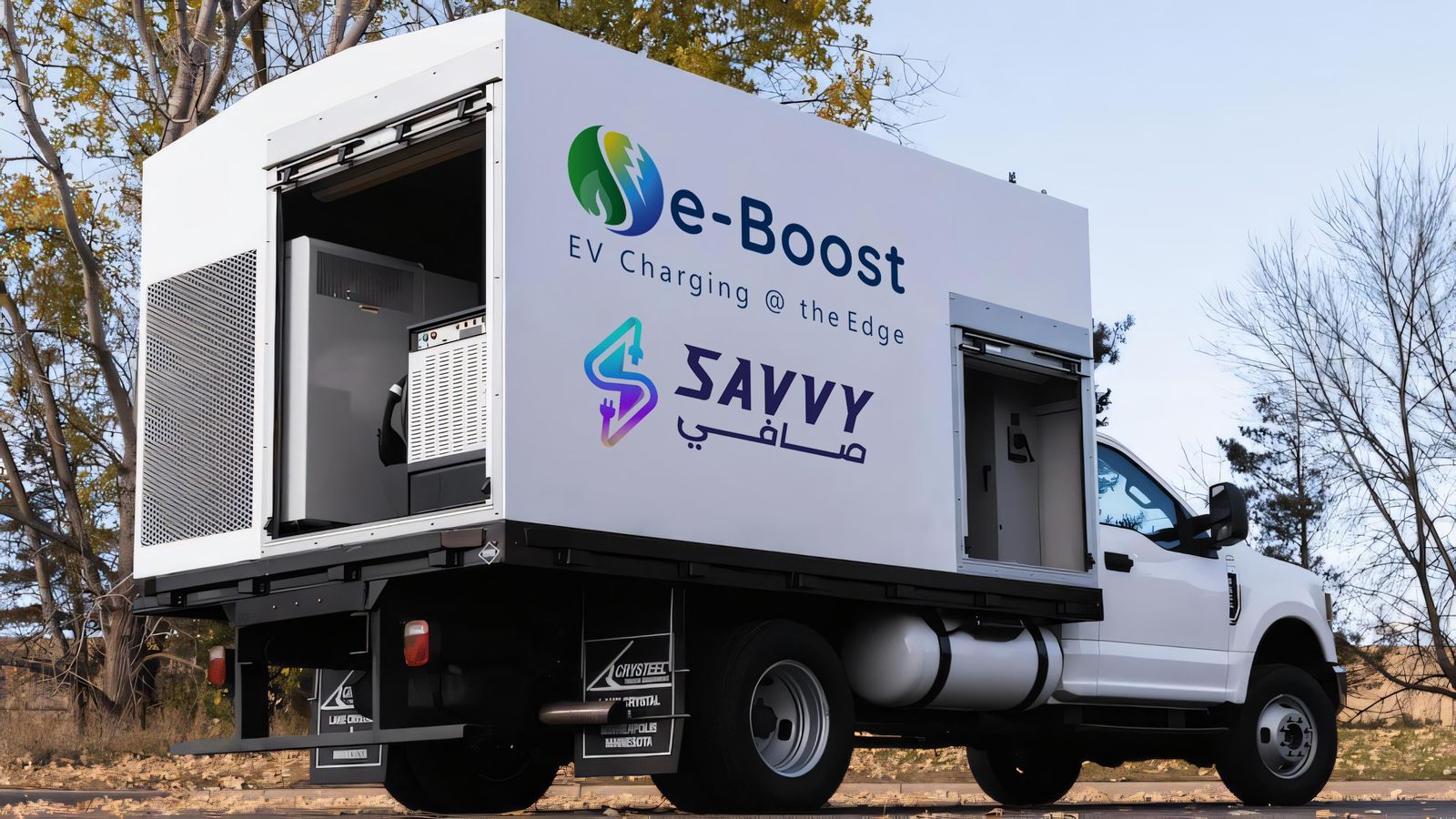
One of the most practical applications is off-grid EV charging. Instead of relying entirely on high-capacity grid connections, battery-backed charging systems can be deployed wherever vehicles operate, enabling businesses to begin electrification projects without waiting months—or even years—for utility upgrades.
For industries such as logistics, mining, construction, ports, airports, and utilities, this flexibility provides a significant operational advantage. Charging infrastructure becomes easier to deploy, relocate, and scale as projects evolve, helping organisations maintain productivity while reducing exposure to infrastructure delays.
Increasingly, businesses are investing in off-grid EV charging systems that combine battery storage, intelligent power management, and portable charging capabilities. Rather than replacing conventional charging infrastructure, these systems complement existing electricity networks by improving resilience, reducing deployment timelines, and supporting business continuity during periods of constrained grid capacity.
Ultimately, distributed energy is no longer viewed as an alternative solution—it is becoming a strategic component of modern electrification strategies.
What This Means for the UAE
The UAE occupies a unique position in this global transition. Rather than choosing between AI leadership and transport electrification, the country is investing aggressively in both as part of its long-term economic diversification strategy.
National initiatives such as the UAE Net Zero 2050 Strategy, continued investment in renewable energy, expanding EV infrastructure, and ambitious AI development programmes demonstrate a commitment to building a digitally advanced, low-carbon economy. At the same time, organisations such as DEWA continue expanding charging infrastructure to support increasing EV adoption across the country.
However, rapid economic growth also creates new infrastructure challenges. AI facilities require uninterrupted, high-density electricity, while logistics companies, municipalities, airports, ports, and construction firms are steadily electrifying their fleets. Meeting both demands requires more than additional power generation—it requires flexible energy infrastructure capable of adapting to changing operational needs.
This is particularly relevant for temporary construction projects, industrial developments, remote operations, and commercial fleets where permanent charging infrastructure may not be immediately available. In these environments, battery-backed and mobile charging solutions provide the flexibility to continue electrification while long-term grid infrastructure evolves.
The UAE therefore has an opportunity to demonstrate how digital transformation and sustainable mobility can develop together through a balanced combination of grid expansion, renewable energy, distributed energy resources, and intelligent charging infrastructure.
Conclusion: AI and EVs Don't Compete—They Demand Smarter Energy Infrastructure
The debate over whether AI compute or EV powering should take precedence ultimately asks the wrong question.
Artificial intelligence will remain central to economic competitiveness, while electric mobility will continue driving decarbonisation and energy transition strategies across developed economies. Neither trend is likely to slow. Instead, both are increasing demand for an electricity system that was never designed to support multiple high-growth industries simultaneously.
The defining challenge is therefore not choosing between AI and EVs—it is modernising electricity infrastructure quickly enough to support both.
For businesses, this requires a broader approach to electrification. Charging infrastructure should no longer be viewed as a standalone investment but as part of a comprehensive energy strategy that incorporates battery storage, distributed energy resources, and operational flexibility. Organisations that adopt resilient energy solutions today will be better prepared for tomorrow's increasingly constrained electricity landscape.
As this transition accelerates, solutions such as on-demand mobile EV charging and battery-backed infrastructure will play an increasingly important role in helping businesses maintain operational continuity while complementing conventional grid-connected charging.
The future of energy will not be defined by AI or EVs alone. It will be shaped by how effectively governments, utilities, and businesses build intelligent, flexible, and resilient energy ecosystems capable of powering both.
Frequently Asked Questions (FAQs)
1. Is AI consuming more electricity than electric vehicles?
Not today, but AI is one of the fastest-growing sources of electricity demand. The International Energy Agency projects that global data centre electricity consumption will more than double by 2030, largely driven by AI workloads. EV electricity demand is also increasing rapidly, making grid expansion essential to support both sectors.
2. Why do AI data centres require so much electricity?
AI models rely on thousands of high-performance GPUs operating continuously. Beyond computing, data centres consume significant electricity for cooling, networking, storage, and backup systems, creating continuous high-density power demand.
3. Are governments prioritising AI over EV charging?
Generally, no. Most developed economies continue investing in both AI infrastructure and transport electrification. The challenge is expanding transmission networks, substations, and distribution infrastructure quickly enough to accommodate both industries.
4. Why is grid capacity becoming a major constraint?
Many electricity grids were designed decades ago for predictable residential and industrial demand. Today's networks must support AI data centres, EV charging, advanced manufacturing, renewable energy integration, and broader electrification, creating significant pressure on transmission and distribution infrastructure.
5. Which industries benefit most from mobile and off-grid charging?
Commercial fleet operators, logistics companies, construction firms, mining operations, ports, airports, utilities, municipalities, and temporary project sites all benefit from flexible charging infrastructure because it improves operational continuity and deployment speed.
6. Why is the UAE well positioned for flexible charging solutions?
The UAE is simultaneously investing in AI, renewable energy, smart cities, and electric mobility. This creates strong demand for scalable, battery-backed, and mobile charging solutions that complement conventional infrastructure while supporting long-term economic growth and sustainability objectives.
Tags: ai compute, ev charging, grid capacity, data centres, distributed energy, uae