· Savvy Team
Explosion of Autonomous Vehicles: But the Question Is, Who Will Charge Them?
As autonomous vehicle fleets scale across the UAE, charging infrastructure, grid capacity, and energy management may become the biggest challenges to commercial deployment. Explore how robotaxis, autonomous charging, and off-grid EV charging will shape the future of mobility.
Introduction
For much of the last decade, autonomous vehicles were largely associated with controlled pilot projects, research environments, and technology demonstrations. Today, that perception is entirely outdated, particularly within the United Arab Emirates. The UAE is positioning itself as one of the world's leading markets for autonomous mobility deployment. Unlike many markets that remain focused on pilot programs and regulatory experimentation, the UAE is actively building a commercial autonomous mobility ecosystem. This combination of government support, regulatory agility, and infrastructure investment creates an environment where autonomous transportation can move from testing to deployment significantly faster than in many other regions.
Anchored by the ambitious Dubai Autonomous Transportation Strategy—which mandates that 25% of all transportation trips in the emirate transition to driverless modes by 2030—the shift from closed-course pilot programs to live public roads is fully underway. This transition is projected to yield up to AED 22 billion in annual economic savings through reduced transportation costs and fewer traffic accidents.
However, as operators scale from testing dozens of vehicles to deploying commercial fleets across the UAE, a critical, industry-defining operational hurdle has emerged. The industry has made remarkable progress in autonomous driving technology. Vehicles can now navigate complex urban environments, interpret road conditions, and make real-time decisions with increasing confidence. The question facing operators today is no longer whether autonomous vehicles can function, but whether the charging infrastructure supporting them can scale. No matter how sophisticated a robotaxi’s software becomes, its commercial success ultimately depends on reliable access to energy. Charging infrastructure, grid capacity, and fleet uptime may become the defining factors that separate successful deployments from stalled ambitions.
The Real Challenge May Be Infrastructure, Not Autonomy
Automotive manufacturers and autonomous software developers have spent the better part of a decade solving incredibly complex technological challenges. Modern autonomous vehicles process dynamic traffic conditions, detect pedestrians, and execute real-time decisions faster than human drivers using advanced suites of LiDAR, multi-band radar, and optical cameras.
History suggests that transportation revolutions are rarely constrained by vehicle technology alone. The initial global surge in consumer electric vehicle (EV) adoption proved that while vehicle manufacturing can scale exponentially, the underlying electrical infrastructure requires extensive utility coordination, heavy capital expenditure, and lengthy deployment times.
For autonomous mobility, this infrastructure gap is magnified. Building a robotaxi is a software and manufacturing feat; supporting a fleet of thousands of them is a massive civil and electrical engineering challenge. Large-scale autonomous operations demand high-power charging networks, centralized fleet depots, robust grid capacity, battery energy storage systems (BESS), and intelligent fleet scheduling platforms. If the deployment of high-voltage infrastructure fails to match vehicle production, operators will face severe bottlenecks that directly impact fleet profitability.
Autonomous Mobility Is Already Here
Autonomous mobility is no longer a future concept in the UAE. The market is rapidly transitioning from controlled testing environments to commercial deployment and real-world operations, with multiple operators already conducting live services, public road testing, and large-scale fleet planning. This shift makes the UAE one of the most closely watched autonomous transportation markets globally.
Companies Currently in Trials and Testing
Tesla
Tesla continues to deploy its Autopilot and Full Self-Driving (FSD) platforms globally. While its consumer-owned approach differs from dedicated commercial robotaxi fleets, the widespread adoption of advanced driver-assistance technologies continues to influence public perception of automated driving and shape broader discussions around autonomous mobility infrastructure and regulation.
Pony.ai
Operating as a global leader in autonomous driving, Pony.ai has actively engaged in extensive trials with the Dubai Roads and Transport Authority (RTA). Their testing phases focus on adapting their advanced software stack to the unique environmental conditions of the UAE, laying essential groundwork for scalable commercial deployments.
Companies with Permits and Commercial Deployments
The first quarter of 2026 marked a definitive turning point for the UAE, with autonomous vehicles transitioning into active commercial service across vibrant neighborhoods.
Apollo Go and Dubai Taxi Company (DTC)
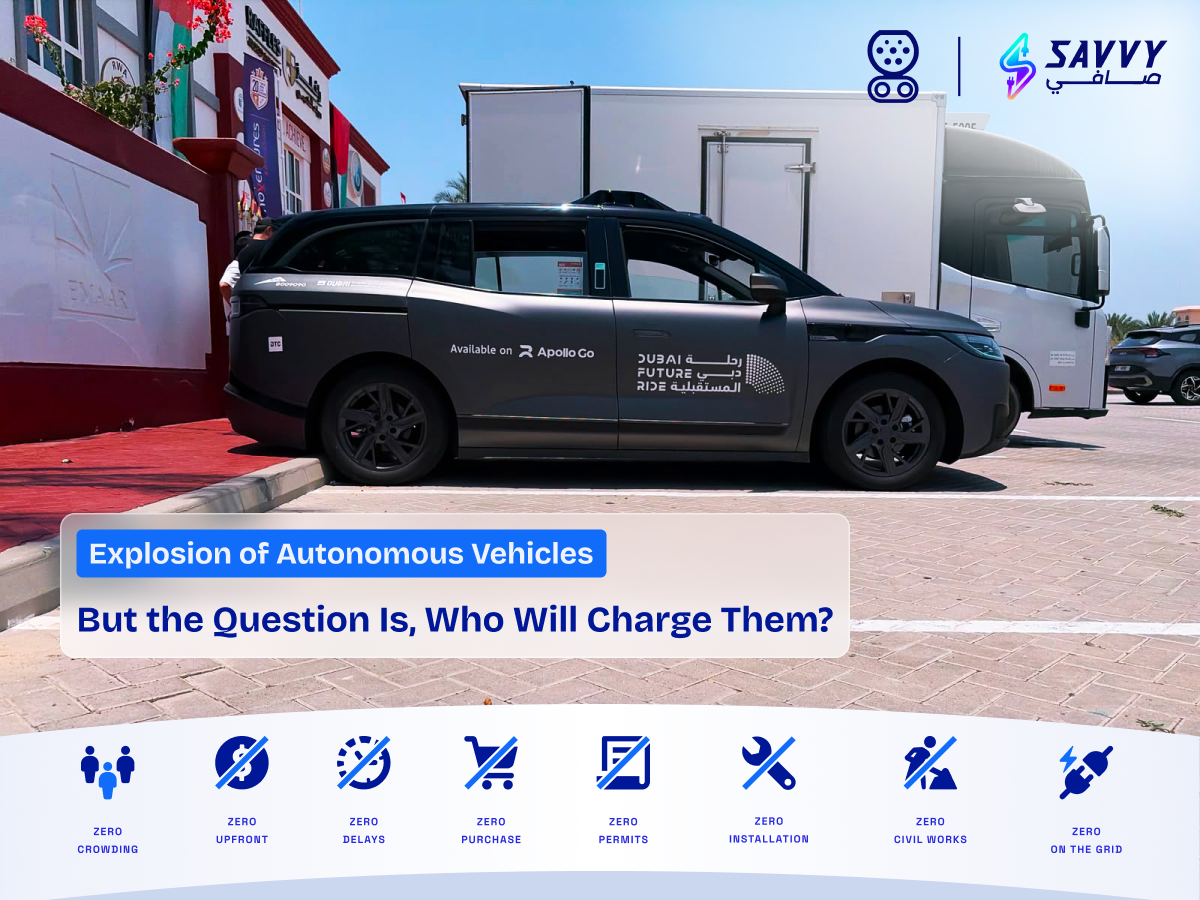
In early 2026, Baidu’s Apollo Go reached a significant milestone by receiving Dubai’s first-ever driverless testing permit without a human safety driver. In March 2026, operating in partnership with the Dubai Taxi Company, Apollo Go officially launched a commercial driverless ride-hailing service in prime zones like Jumeirah and Umm Suqeim. Utilizing purpose-built RT6 robotaxis, the fleet is supported by the Apollo Go Park in Dubai Science Park—a 2,000-square-meter operations and management hub representing the company's first overseas facility. Publicly announced deployment plans indicate ambitions to scale autonomous fleets significantly over the coming years, highlighting the scale of infrastructure planning required to support long-term commercial operations.
WeRide and Uber
WeRide, after securing the UAE’s first preliminary national license for autonomous driving, expanded its Middle East footprint significantly. Partnering with the Uber platform for ride bookings and Tawasul Transport for comprehensive fleet management, WeRide's robotaxis run extensive commercial operations in Abu Dhabi and are actively integrating into Dubai's smart mobility network.
This commercial reality introduces a significant infrastructure challenge: as operators scale their fleets across Dubai, can fleet charging infrastructure and grid capacity expand quickly enough to support growing energy demand?
Unlike pilot programs involving dozens of vehicles, commercial fleets introduce a scale challenge. A fleet of hundreds or thousands of autonomous vehicles can create concentrated charging demand that must be carefully managed to avoid operational bottlenecks, grid constraints, and rising energy costs. As fleet density increases, charging infrastructure becomes a strategic planning challenge rather than a simple equipment deployment exercise.
A Robotaxi Does Not Charge Like a Private EV
The fundamental unit economics of a privately owned EV do not apply to an autonomous fleet. When assessing infrastructure readiness, we must entirely separate consumer charging from fleet charging.
A consumer EV sits idle for approximately 90% of its lifespan—parked at an office during the day or sitting in a home garage overnight. This massive window of idle time naturally accommodates slow, low-power AC charging.
An autonomous fleet operates on entirely different fleet uptime economics. A robotaxi only generates value when its wheels are turning with a paying passenger inside. Operators target continuous high utilization. Every minute spent charging is time a robotaxi is unavailable for service. This fundamentally changes how operators evaluate charging infrastructure. Instead of focusing solely on charger availability, autonomous fleet operators must evaluate charging efficiency, energy throughput, fleet utilization, and charging turnaround times as core business metrics.
Why Vehicle Utilization Changes Everything
A privately owned EV may spend most of its life parked. An autonomous robotaxi is designed to maximize utilization, often operating for extended periods throughout the day. This creates a fundamentally different charging challenge.
For fleet operators, charging infrastructure is more than an energy requirement—it directly influences productivity, vehicle availability, and operating costs. Every hour spent waiting for a charger, travelling to a charging location, or charging inefficiently reduces vehicle availability and revenue-generating capacity.
As autonomous mobility scales, vehicle utilization rates may become one of the most important factors influencing charging infrastructure design, fleet economics, and long-term operational efficiency.
Who Will Actually Charge Autonomous Vehicles?
Today's EV charging ecosystem was designed around human behavior. Drivers locate charging stations, initiate charging sessions, connect charging cables, and move vehicles once charging is complete. Autonomous mobility introduces a fundamentally different requirement: the charging process itself must become increasingly autonomous.
Dedicated Fleet Charging Hubs
Instead of relying on fragmented public infrastructure, autonomous operators are shifting toward a depot charging strategy. Facilities such as Apollo Go Park in Dubai Science Park demonstrate how autonomous operators are beginning to build dedicated charging and fleet management ecosystems. Inside a depot, operators control the charging environment, balancing electrical loads while fleet technicians prep the vehicles for their next shift.
Organizations preparing for the future of autonomous transportation are increasingly evaluating scalable energy solutions from Savvy Energy to support evolving charging requirements and fleet operations.
Autonomous Charging Systems
To achieve true operational autonomy, the industry is heavily investing in robotic charging technologies. These systems utilize conductive robotic arms equipped with advanced computer vision. A robotaxi navigates into a designated charging bay, and a robotic actuator automatically locates the charge port and initiates the high-voltage connection—dramatically reducing labor costs.
Wireless Charging
Wireless or inductive charging represents another critical solution. By embedding high-power charging pads into depot floors or designated RTA taxi ranks, vehicles receive power by simply parking over a magnetic resonance zone. Although the technology is still developing and faces efficiency challenges compared to conventional DC fast charging, the lack of moving parts makes it an attractive low-maintenance option for fleet staging areas.
Charging Is Not Just About Electricity
As autonomous fleets scale, charging challenges extend beyond simply providing energy. Fleet operators must also balance battery health, charging speed, energy costs, and vehicle availability.
Frequent high-power charging can improve fleet uptime but may accelerate battery degradation over time. Slower charging strategies may preserve battery performance but reduce operational flexibility. Future autonomous fleet operators will likely depend on intelligent energy management systems capable of balancing these competing priorities.
This highlights an important reality: scaling autonomous mobility is not just an infrastructure challenge, but also an energy management challenge.
Is UAE Infrastructure Ready for Autonomous Fleets?
While the UAE has invested heavily in smart city infrastructure, transportation technology, and EV charging networks, supporting large-scale autonomous fleets introduces a different set of energy and infrastructure requirements. As fleet density increases, charging demand becomes more concentrated, placing additional pressure on electrical infrastructure and long-term energy planning.
For autonomous mobility, the bottleneck shifts from simple charger availability to significant grid capacity implications. Consider a centralized depot housing hundreds of RT6 robotaxis. If the fleet scheduling software determines that a large portion of these vehicles must utilize 150kW DC fast chargers simultaneously ahead of the morning commute, the facility will draw massive amounts of power. Dropping that level of concentrated load onto a standard commercial grid segment can necessitate massive localized infrastructure upgrades.
Supporting these operations requires upgraded substations, additional transformer capacity, and the integration of behind-the-meter Battery Energy Storage Systems (BESS) to shave peak demand.
Beyond charging hardware, operators must also consider long-term energy resilience. This is particularly relevant in high-growth markets where fleet expansion can outpace infrastructure development. In these environments, energy planning becomes just as important as vehicle deployment planning. Because utility upgrades and regulatory compliance assessments take time, infrastructure deployment timelines risk lagging behind the software readiness of autonomous fleets.
Why Flexible Charging Models Will Become Increasingly Important
Because deploying permanent, megawatt-scale charging depots is a multi-year civil engineering endeavor, autonomous fleet operators cannot simply wait for utility upgrades to expand their services. The charging ecosystem will rely heavily on flexible, decentralized solutions to bridge the infrastructure gap and ensure fleet uptime.
In locations where utility upgrades may take months or even years to complete, off grid EV charging becomes a practical deployment strategy. By combining battery storage systems with modular charging infrastructure, operators can establish high-power charging capacity without waiting for extensive grid expansion projects.
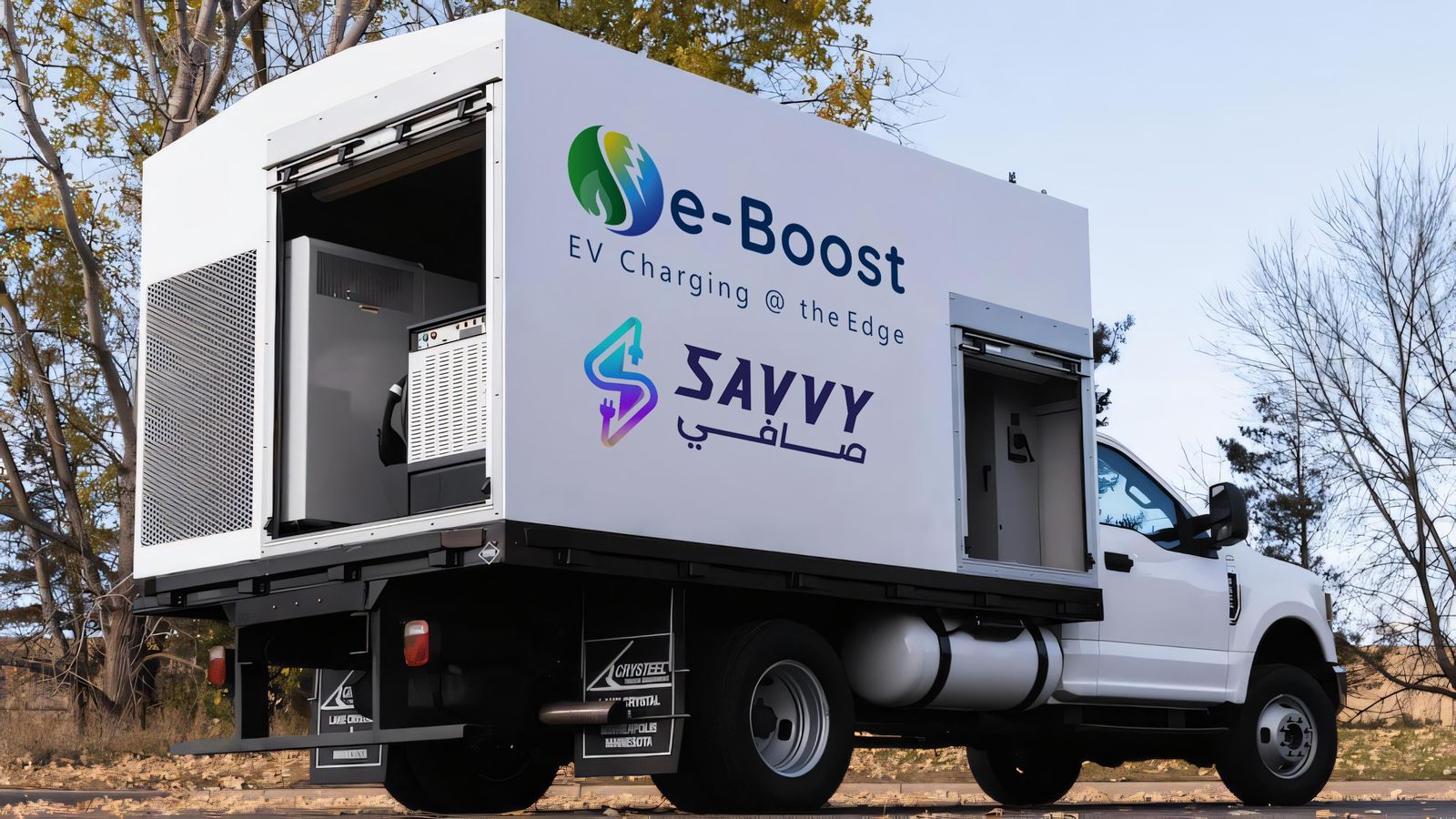
Furthermore, dynamic fleet operations inevitably encounter edge cases. A robotaxi might be routed to a distant suburb and run low on battery far from its designated hub. In these scenarios, mobile EV charging can serve as a practical operational backup. Rather than removing vehicles from service and sending them back to a charging depot, operators can deliver charging capacity directly to the vehicle. This reduces downtime, improves fleet utilization, and minimizes non-revenue travel.
Organizations planning for long-term autonomous fleet growth are increasingly evaluating flexible solutions from Savvy Energy to support charging deployment without waiting for lengthy grid upgrades.
Industry Perspective: Infrastructure Determines Scale
One lesson repeatedly observed across transportation and energy transitions is that infrastructure often takes longer to deploy than the technologies it supports.
Vehicles can be manufactured relatively quickly. Infrastructure requires utility coordination, permitting, engineering studies, site preparation, construction, and long-term investment.
The autonomous mobility industry may therefore face a familiar challenge. Vehicle technology is advancing rapidly, but charging infrastructure, energy capacity, and deployment timelines must keep pace if fleets are expected to scale commercially.
For fleet operators, infrastructure readiness may ultimately become just as important as vehicle autonomy itself. Operators that plan charging infrastructure alongside fleet deployment are likely to avoid many of the bottlenecks that emerge during rapid expansion.
Conclusion
The autonomous mobility industry has decisively entered its commercialization phase. Companies such as Apollo Go, WeRide, Pony.ai, Tesla, and others are helping shape the next generation of transportation through testing, deployment, and commercial operations. The UAE has positioned itself among the world's most ambitious autonomous mobility markets, combining regulatory support with a long-term vision for intelligent transportation.
Building autonomous vehicles is no longer the hardest part of the equation. As deployments expand across cities, airports, logistics corridors, and industrial zones, ensuring reliable access to energy may become the more difficult challenge.
History shows that transportation revolutions are rarely limited by the vehicles themselves. More often, they are limited by the infrastructure supporting them. Autonomous mobility may follow the same path. The organizations that solve charging availability, grid capacity, energy management, and fleet efficiency will be the ones best positioned to lead the next generation of transportation.
The future of autonomous transportation will not be defined solely by how safely these vehicles drive. It will be defined by how effectively the industry builds the infrastructure needed to keep them moving.
Frequently Asked Questions
Are autonomous vehicles already operating in the UAE?
Yes. The UAE has transitioned from closed testing to live commercial operations. As of early 2026, vehicles from operators like Apollo Go and WeRide are actively deployed for commercial ride-hailing services in designated areas of Dubai (such as Jumeirah and Umm Suqeim) and Abu Dhabi, bookable via apps like Uber and Apollo Go.
Which companies are testing autonomous vehicles in Dubai?
Dubai's autonomous mobility ecosystem features several global players. Baidu's Apollo Go operates commercially and manages fleets from its facility in Dubai Science Park. WeRide operates a commercial fleet managed by Tawasul Transport. Companies like Pony.ai have also engaged in extensive mapping and trials with the RTA.
Why is charging more challenging for autonomous fleets than private EVs?
Private EVs typically charge during long periods of inactivity, such as overnight or while parked at work. Autonomous fleets operate at much higher utilization rates, making charging efficiency, charger availability, and downtime management significantly more important.
Does the UAE have autonomous taxis?
Yes. Commonly referred to as robotaxis, these vehicles are commercially available. In Dubai, the RTA and Dubai Taxi Company (DTC) oversee fleets of fully autonomous vehicles operated via the Apollo Go platform. In Abu Dhabi, WeRide provides commercial driverless services.
Who will charge autonomous vehicles?
Today, most autonomous fleet operators still rely on conventional charging processes supported by operational staff. However, the industry is actively developing robotic charging systems, autonomous charging depots, and wireless charging technologies designed to reduce or eliminate human involvement over time.
Can autonomous vehicles charge themselves?
While autonomous charging technologies continue to advance, large-scale commercial deployment remains in the early stages and adoption is expected to occur gradually as infrastructure matures.
Will autonomous fleets require dedicated charging hubs?
In many cases, yes. Relying solely on fragmented public EV infrastructure can become challenging for commercial fleet operations. Operators require centralized, high-capacity depots equipped with smart energy demand forecasting software to maximize charger utilization, conduct daily maintenance, and minimize turnaround times.
What is off-grid EV charging?
Off-grid EV charging refers to modular, independent charging stations that generate or store their own power without requiring a direct connection to the local utility grid. This allows fleet operators to rapidly deploy rapid charging hubs in remote areas or urban locations facing grid upgrade delays.
How can mobile EV charging support autonomous fleets?
Mobile EV charging serves as a critical operational fail-safe for autonomous fleets. By dispatching a specialized rapid charging vehicle directly to an idle or low-battery robotaxi, fleet operators can rescue stranded assets, drastically reduce non-revenue driving time (deadheading), and dynamically expand charging capacity during periods of high passenger demand.
Tags: autonomous vehicles,robotaxi,ev charging,off-grid ev charging,mobile ev charging,dubai,uae,smart mobility,apollo go,weride,tesla,pony ai,fleet charging,bess