· Savvy Team
EV Charging Solutions for Fleet Management in Dubai | 2026 Guide
Explore scalable EV charging solutions for fleet management in Dubai, including infrastructure planning, uptime, charging reliability, and operational flexibility for growing electric fleets.
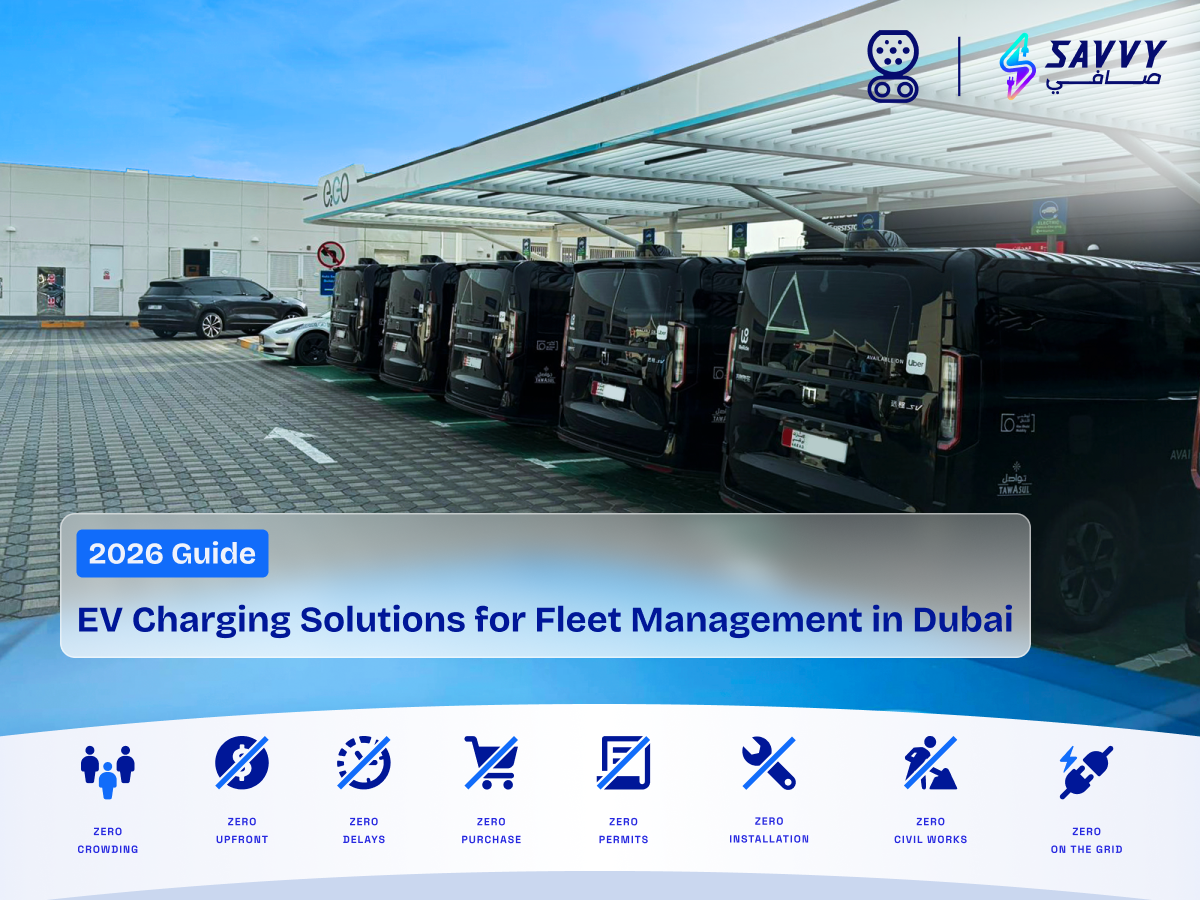
Fleet electrification is rapidly expanding across Dubai and the UAE as businesses continue transitioning toward electric mobility. However, managing electric fleets involves more than simply deploying EVs. One of the biggest operational challenges businesses face is building charging infrastructure that supports daily operations efficiently.
Unlike personal EV charging, fleet charging directly impacts vehicle uptime, route planning, operational continuity, and long-term scalability. For logistics companies, transportation providers, delivery fleets, and industrial operators, charging infrastructure is becoming a core part of operational planning.
As commercial EV adoption grows, businesses are increasingly evaluating fleet charging solutions that can support flexible operations while adapting to future infrastructure requirements.
Why Fleet Charging Requires Strategic Planning
Fleet charging infrastructure must support multiple vehicles, operational schedules, and charging demand across different locations. A charging setup that works for a small fleet today may not support larger operations in the future.
Businesses often evaluate charging strategies based on factors such as fleet size, operational downtime, charging accessibility, and future expansion plans. Some fleets may require centralized overnight charging, while others may need charging access across multiple operational environments.
Without proper planning, charging bottlenecks can affect vehicle availability and operational efficiency.
Common EV Charging Solutions for Fleets
Different businesses use different charging approaches depending on operational requirements.
Depot-based charging is commonly used for centralized fleet operations where vehicles return to a fixed location for overnight charging. This model works well for businesses operating from permanent depots or facilities.
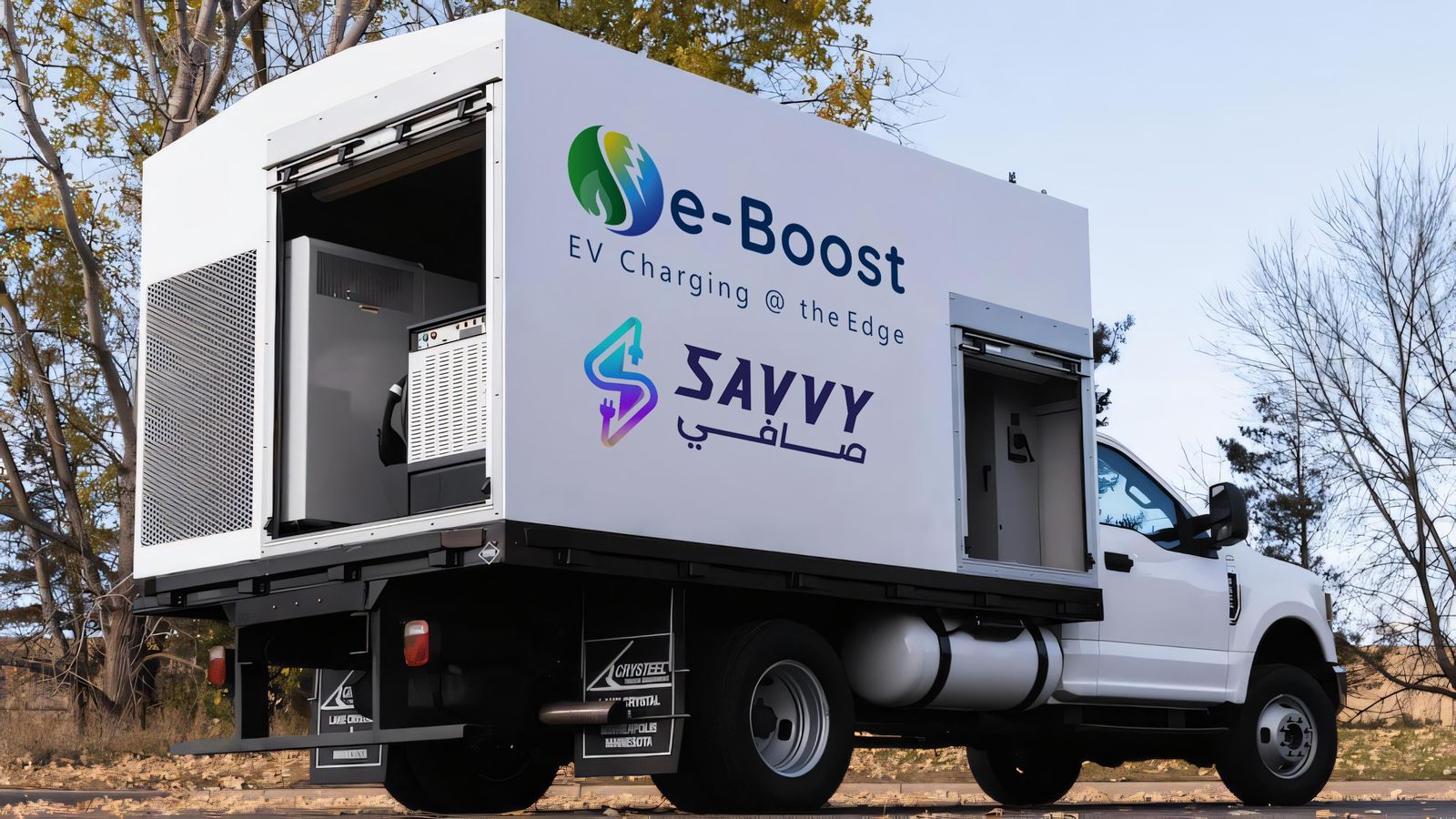
Mobile charging solutions are increasingly being used for temporary operations, overflow charging demand, and dynamic fleet environments. These systems can provide greater operational flexibility for businesses operating across multiple locations.
Off-grid charging solutions are also becoming more relevant for industrial operations, remote environments, and locations where permanent charging infrastructure may not yet be available.
In many cases, businesses are combining multiple charging models to create more scalable and flexible charging ecosystems.
What Businesses Should Evaluate Before Deployment
Before selecting charging infrastructure, businesses should assess how charging fits into actual operational workflows.
Important considerations often include:
* Fleet growth plans * Charging demand during peak operations * Vehicle downtime windows * Route planning * Charging accessibility * Infrastructure scalability
Charging infrastructure planning is no longer only about installing chargers. Businesses increasingly need charging systems that align with operational efficiency and long-term fleet expansion.
Why Charging Reliability Matters
For commercial fleets, charging reliability directly impacts operational continuity. Delays in charging availability can affect deliveries, scheduling, and overall fleet productivity.
As EV adoption scales, businesses increasingly prioritize infrastructure reliability, charging accessibility, and operational uptime. Many fleet operators are also exploring charging monitoring systems and analytics tools to improve charging efficiency and infrastructure management.
Reliable charging infrastructure becomes increasingly important as businesses expand electric fleet operations across the UAE.
The Future of Fleet Charging in Dubai
As electric mobility continues growing across Dubai and the UAE, charging infrastructure is expected to become more flexible and operationally adaptive.
Businesses are increasingly exploring charging ecosystems that combine:
* Depot charging * Mobile charging * Distributed charging infrastructure * Intelligent charging management
Future fleet charging strategies will likely focus not only on charging capability, but also on operational scalability, infrastructure flexibility, and charging efficiency.
Conclusion
Fleet charging infrastructure is becoming a critical operational consideration for businesses transitioning toward electric mobility in Dubai and the UAE.
The right charging solution depends on operational requirements, fleet structure, scalability goals, and infrastructure readiness. As commercial EV adoption continues growing, businesses increasingly require charging systems that support both operational efficiency and long-term expansion.
Companies seeking flexible charging deployment options can explore solutions offered by Savvy Energy to support evolving fleet requirements across the UAE.
Looking for scalable EV charging solutions for fleet operations in Dubai and the UAE?
Explore Savvy’s mobile and fleet charging solutions:
Frequently Asked Questions
What is fleet EV charging?
Fleet EV charging refers to charging infrastructure designed to support multiple commercial electric vehicles within operational fleet environments.
Why is fleet charging different from normal EV charging?
Fleet charging must support operational uptime, vehicle scheduling, scalability, and multi-vehicle charging demand.
What charging solutions are commonly used for fleets?
Businesses commonly use depot charging, mobile charging, off-grid charging, and hybrid charging models depending on operational requirements.
Tags: ev charging, fleet charging, fleet management, electric vehicles, dubai, uae, charging infrastructure