· Savvy Team
What Is Off-Grid EV Charging and Why Does It Matter for the UAE?
Discover what off-grid EV charging is, how it works, and why flexible charging solutions are becoming important for UAE businesses, fleets, logistics, construction, and industrial operations.
Electric mobility in the UAE is no longer driven solely by environmental goals—it's becoming a business decision. Logistics providers are electrifying delivery fleets, industrial companies are introducing electric service vehicles, and public sector organisations are expanding their use of EVs as part of wider sustainability initiatives. While the availability of electric vehicles has improved significantly, charging infrastructure remains one of the biggest operational considerations for businesses planning large-scale EV adoption.
For commercial fleet operators, charging isn't simply about finding the nearest charging station. It's about ensuring vehicles can be charged where they operate, when they're available, and without disrupting daily operations. A delivery vehicle parked overnight at a temporary depot, equipment operating on a construction site, or vehicles working across industrial zones may all have different charging requirements. In many of these scenarios, waiting for permanent charging infrastructure isn't commercially practical.
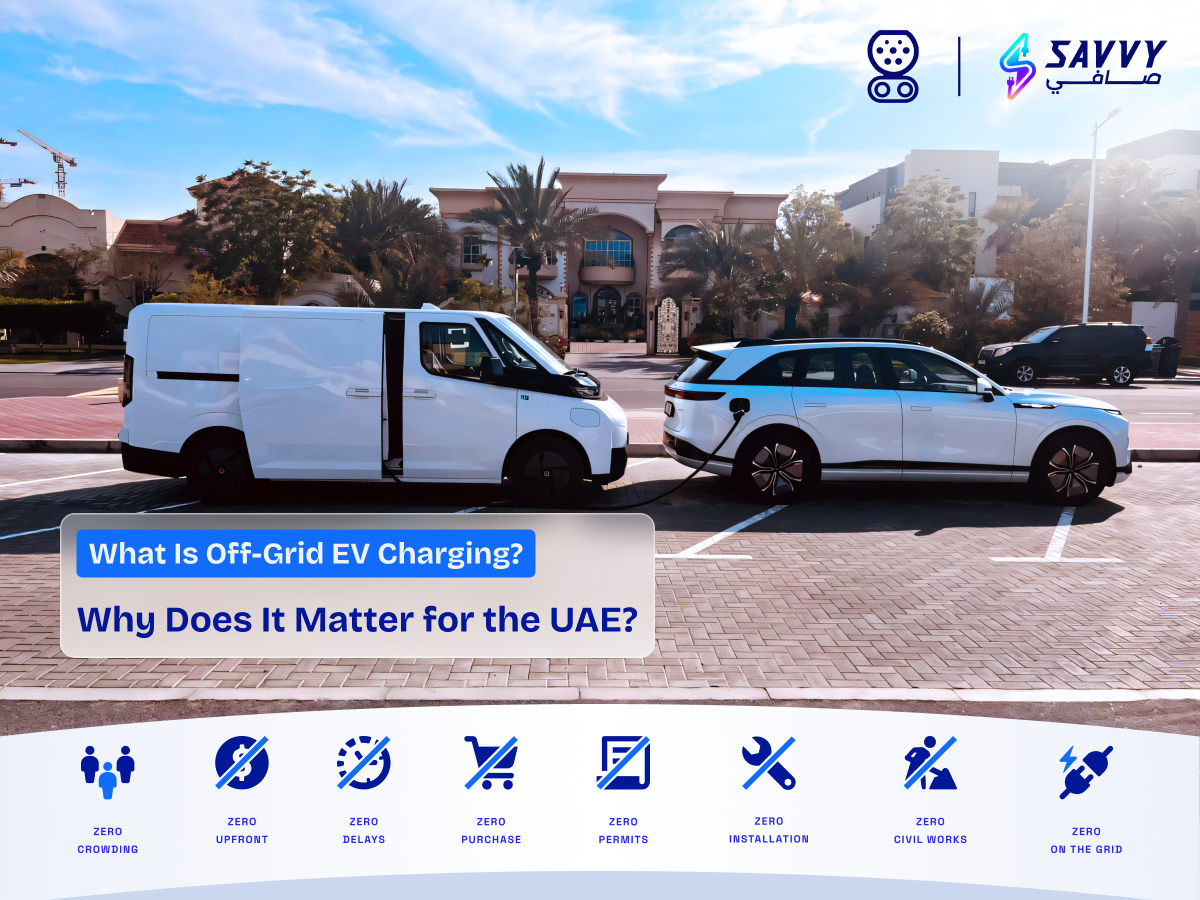
This is where off-grid EV charging has become increasingly relevant. Rather than depending entirely on fixed charging stations connected to the electricity grid, businesses are adopting off-grid EV charging solutions that bring charging capability directly to operational environments. This allows organisations to deploy charging where it's needed today instead of waiting for infrastructure projects to be completed tomorrow.
The role of off-grid charging isn't to replace conventional charging stations. Instead, it fills the operational gaps that permanent infrastructure cannot always address. For businesses managing dynamic fleets, temporary facilities, or rapidly expanding operations, it provides the flexibility needed to keep vehicles moving while long-term charging infrastructure continues to evolve.
What Is Off-Grid EV Charging?
Off-grid EV charging refers to charging systems that operate independently of permanently installed, grid-connected charging stations. Unlike traditional charging infrastructure, which is fixed to a specific location, off-grid charging can be deployed wherever charging demand exists.
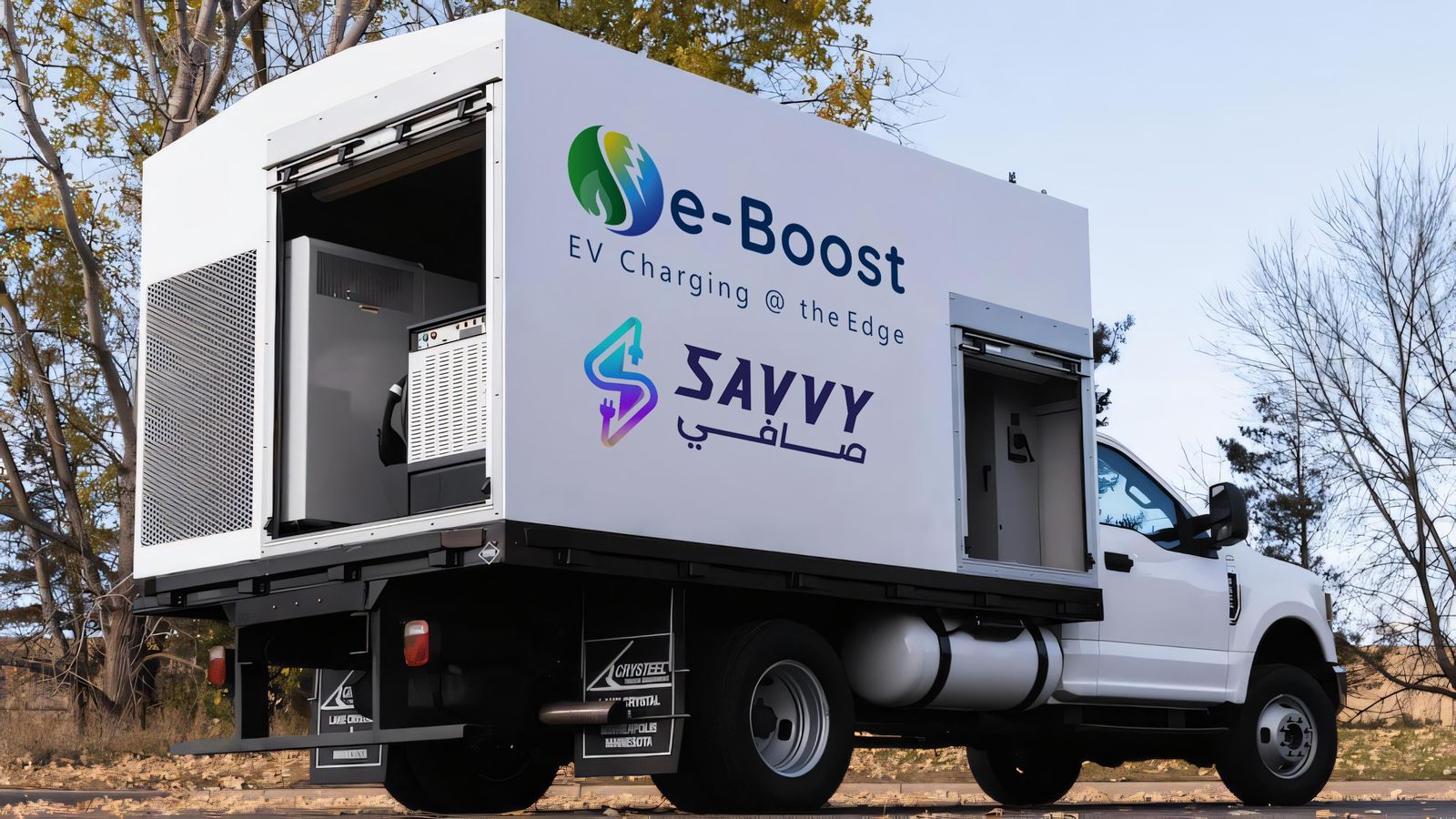
Depending on operational requirements, these systems may use battery-supported charging, portable DC charging equipment, mobile charging units, or containerised charging solutions. While the technologies differ, the principle remains the same—bringing energy to the vehicle instead of requiring the vehicle to travel to a charging point.
This distinction is particularly important for commercial operations.
Fleet vehicles rarely operate in predictable environments. Distribution hubs may be opened temporarily during periods of increased demand. Construction projects move through multiple phases and locations. Utility companies, airports, ports, and industrial facilities often manage vehicles across large operational areas where charging requirements constantly change.
Installing permanent charging infrastructure for every operational location is not always commercially viable, particularly when those locations may only be active for a few weeks or months.
Instead, many organisations are shifting towards a more flexible charging model where permanent infrastructure supports routine charging while off-grid solutions provide additional capacity wherever operational demand exists. This hybrid approach allows charging infrastructure to adapt alongside the business instead of limiting how the business operates.
Why Businesses Are Looking Beyond Traditional Charging Infrastructure
One of the biggest misconceptions about fleet electrification is that purchasing electric vehicles is the most significant investment. In reality, many organisations discover that planning charging infrastructure becomes equally important once operations begin to scale.
Permanent charging stations remain essential for long-term operations, but they are designed around fixed locations. Commercial businesses, however, rarely operate in fixed environments.
A logistics company may temporarily expand warehouse operations during seasonal demand. A contractor may establish multiple project sites across different emirates within a single year. Industrial facilities may introduce electric service vehicles before electrical upgrades have been completed. In each of these situations, business requirements often change faster than charging infrastructure can be delivered.
Infrastructure planning also requires organisations to make long-term decisions based on future demand. Installing too few charging points may restrict fleet growth, while overbuilding infrastructure before it's required can increase project costs unnecessarily.
This uncertainty has encouraged many businesses to move away from viewing charging as a single infrastructure project. Instead, they are developing charging strategies that combine permanent installations with flexible charging resources capable of supporting temporary demand, infrastructure upgrades, and operational expansion.
Rather than asking, "How many chargers do we need?", fleet managers are increasingly asking, "How can charging infrastructure adapt as our operations evolve?" That shift in thinking is one of the key reasons off-grid charging has become an important consideration for commercial EV deployment.
How Off-Grid EV Charging Works
Unlike conventional charging infrastructure, which requires vehicles to travel to a charger, off-grid charging is designed around operational flexibility.
Charging systems can be deployed wherever vehicles require energy, whether that's at a temporary logistics hub, an industrial facility, a construction project, or a remote operational site. Once operational requirements change, charging infrastructure can be relocated accordingly.
Consider a logistics operator opening a temporary fulfilment centre during peak retail seasons. Installing permanent charging infrastructure for a facility that operates for only a few months may not represent the most efficient investment. Deploying temporary charging allows the fleet to operate immediately while avoiding unnecessary infrastructure costs.
A similar situation exists within the construction industry. During the early stages of major projects, temporary power infrastructure is typically prioritised for site operations, lighting, and equipment. As electric vehicles and machinery become more common, flexible charging enables contractors to introduce electric fleets without waiting for permanent electrical infrastructure to be completed.
Off-grid charging also provides resilience during infrastructure upgrades. Existing charging stations occasionally require maintenance, expansion, or electrical improvements. During these periods, mobile EV charging services can help maintain fleet availability by providing temporary charging support without interrupting operations.
Ultimately, the value of off-grid charging extends beyond mobility. It provides businesses with greater operational resilience, allowing charging infrastructure to evolve alongside changing fleet requirements instead of becoming a constraint on future growth.
In the next section, we'll explore why this flexibility is becoming particularly important across the UAE and the industries where off-grid EV charging delivers the greatest operational value.
Why Off-Grid EV Charging Matters for the UAE
The UAE's commitment to sustainable mobility extends beyond increasing the number of electric vehicles on the road. As economic zones expand, logistics activity grows, and infrastructure projects continue across the country, businesses require charging solutions that can adapt to changing operational demands rather than remain fixed to a single location.
Commercial fleet operators often work across multiple facilities, temporary depots, industrial zones, ports, and construction sites. While permanent charging infrastructure continues to expand, operational requirements frequently move faster than infrastructure development. This makes charging flexibility just as important as charging speed.
Off-grid EV charging helps bridge this gap by enabling organisations to deploy charging where operations are taking place today, rather than waiting for permanent infrastructure to become available. For businesses introducing EVs gradually, it also provides an opportunity to evaluate charging patterns before making long-term infrastructure investments.
Instead of viewing off-grid charging as a replacement for fixed charging stations, many organisations now see it as a complementary solution that improves operational resilience while supporting long-term electrification goals.
Common Applications of Off-Grid EV Charging
Fleet Operations
Fleet operators are among the earliest adopters of off-grid charging because vehicle availability directly impacts business performance. Whether supporting delivery fleets, field service vehicles, or municipal transport, flexible charging enables businesses to maintain operations even when permanent infrastructure is limited or expanding.
Logistics and Distribution Centres
Distribution networks regularly adjust capacity to meet changing demand. Temporary fulfilment centres, seasonal logistics hubs, and newly commissioned warehouses may require immediate charging before permanent infrastructure is completed. Off-grid charging provides a practical way to support fleet operations during these transition periods.
Construction and Infrastructure Projects
Construction projects rarely remain in one location. As work progresses, site requirements change and equipment is relocated. Rather than investing in permanent charging infrastructure at every project location, contractors can deploy temporary charging where electric vehicles and equipment are actively operating.
Industrial and Remote Operations
Industrial facilities, ports, mining sites, and utility operations often manage vehicles across large operational areas. Portable charging infrastructure helps provide charging support where fixed installations may not always be practical, particularly during maintenance, infrastructure expansion, or remote field operations.
Emergency and Temporary Charging
Unexpected situations such as vehicle breakdowns, infrastructure maintenance, public events, or temporary operational changes may require charging outside established charging networks. Businesses increasingly utilise mobile EV charging services to maintain fleet availability during these scenarios without interrupting day-to-day operations.
Key Benefits of Off-Grid EV Charging
Faster Deployment
Charging capability can often be introduced much faster than traditional infrastructure projects, allowing organisations to begin operating electric vehicles while permanent charging facilities continue to develop.
Greater Operational Flexibility
Charging infrastructure can be relocated as business requirements evolve. This flexibility enables organisations to respond to temporary projects, fleet expansion, or changing operational priorities without significant infrastructure investment.
Improved Fleet Availability
Reducing the distance vehicles travel for charging helps maximise productive operating time. For commercial fleets where utilisation directly affects profitability, this can improve overall operational efficiency.
Supports Scalable Electrification
Many organisations electrify fleets gradually rather than replacing every vehicle at once. Flexible charging infrastructure allows charging capacity to grow alongside fleet expansion instead of requiring significant upfront investment.
Business Continuity
Off-grid charging also provides resilience during maintenance, infrastructure upgrades, or unexpected charging demand, helping organisations maintain operations while permanent charging assets remain unavailable.
Off-Grid Charging vs Traditional Charging Infrastructure
Although they are often compared, off-grid and traditional charging serve different operational purposes.
Permanent charging stations remain the preferred solution for routine depot charging and long-term infrastructure planning. They provide consistent charging capacity where vehicle movements are predictable and electrical infrastructure is readily available.
Off-grid charging, on the other hand, addresses situations where flexibility is more important than permanence. Temporary worksites, infrastructure upgrades, fleet expansion, emergency response, and remote operations are all scenarios where mobile charging provides operational advantages.
Rather than choosing one approach over the other, many organisations are developing hybrid charging strategies that combine fixed infrastructure with flexible charging resources. This allows businesses to optimise both long-term investment and day-to-day operational efficiency.
The Future of Off-Grid EV Charging in the UAE
As EV adoption continues to grow across the UAE, charging strategies are expected to become increasingly diversified. Future infrastructure will likely combine public charging networks, private depot charging, workplace charging, battery-supported charging systems, and off-grid deployments to support different operational requirements.
Commercial fleet operators are also placing greater emphasis on charging flexibility during the early stages of electrification. Instead of immediately investing in large-scale permanent infrastructure, many organisations first evaluate fleet utilisation, charging behaviour, and operational demand before expanding fixed charging networks.
This trend is expected to increase the role of off-grid charging, particularly for industries operating across multiple sites or requiring temporary charging capability.
Businesses planning long-term fleet electrification can explore commercial EV charging solutions that support both permanent infrastructure planning and flexible deployment strategies as operational requirements evolve.
Conclusion
The transition to electric mobility is no longer simply about replacing conventional vehicles with electric alternatives. It also requires businesses to rethink how charging infrastructure supports day-to-day operations.
For many organisations, the most effective charging strategy is not choosing between fixed or off-grid charging—it is combining both to create a flexible, resilient charging ecosystem.
Off-grid EV charging enables businesses to reduce infrastructure constraints, support temporary operations, improve fleet availability, and continue electrification projects without waiting for permanent charging installations.
As commercial EV adoption accelerates across the UAE, organisations that incorporate flexible charging into their infrastructure strategy will be better positioned to scale operations, respond to changing business requirements, and support long-term sustainable mobility.
Frequently Asked Questions
What is off-grid EV charging?
Off-grid EV charging refers to charging systems that can operate independently of permanently installed grid-connected charging stations. These solutions are commonly used where flexible or temporary charging is required.
Is off-grid EV charging suitable for commercial fleets?
Yes. Commercial fleets often operate across multiple locations where permanent charging infrastructure may not yet exist. Off-grid charging provides additional flexibility while supporting day-to-day fleet operations.
Where is off-grid EV charging commonly used?
It is commonly used at logistics hubs, fleet depots, construction projects, industrial facilities, ports, temporary worksites, remote operations, and during emergency charging situations.
Can off-grid charging replace permanent charging stations?
Not entirely. Permanent charging stations remain essential for long-term charging requirements, while off-grid charging complements fixed infrastructure by providing flexibility during temporary operations, infrastructure expansion, or changing operational needs.
Why is off-grid EV charging becoming more important in the UAE?
As commercial EV adoption grows, businesses increasingly require charging infrastructure that can adapt to evolving operational requirements. Off-grid charging helps bridge the gap between fleet expansion and permanent infrastructure development, making it an important component of the UAE's growing EV ecosystem.
Tags: Off-Grid EV Charging, EV Charging UAE, Electric Vehicle Charging, Mobile EV Charging, Commercial EV Charging, EV Fleet Charging, UAE EV Infrastructure, Sustainable Mobility, Fleet Electrification, EV Charging Solutions