· Savvy Team
Why Every New Residential Development Needs EV Charging Infrastructure
As electric vehicles become common across the UAE, EV charging is turning into a core part of residential planning. Here is why developers should plan for it during construction, and how mobile charging can fill the gap.
Residential developments are evolving as electric vehicles become an increasingly common choice across the UAE. For property developers, this creates a new infrastructure requirement: providing convenient and accessible EV charging facilities.
Just as internet connectivity and parking have become important considerations in modern housing, EV charging is becoming a valuable addition to residential communities.
At Savvy Energy, we believe EV charging should be considered during the planning and development stage rather than treated as an afterthought.
The Growing Demand for EV Charging in the UAE
The UAE's transition towards electric mobility is creating greater demand for accessible charging infrastructure.
Dubai recorded 47,944 registered electric vehicles by the end of 2025, representing 27.9% growth compared with 2024. The emirate also had more than 1,860 EV charging points.
This growth highlights an important opportunity for residential developers. As more residents switch to electric vehicles, access to convenient charging facilities will become an increasingly important consideration when choosing a property.
However, expanding public charging networks alone is not enough. Residents also need practical charging options where they live.
Why EV Charging Should Be Planned During Construction
Installing EV charging infrastructure during construction is generally more practical than adding it after residents move in.
Retrofitting can involve additional electrical assessments, cable installations, modifications to existing infrastructure and building approvals.
For developers, planning ahead offers three important advantages:
- Reduced installation complexity: Electrical provisions and cable pathways can be incorporated into the original construction. - Better power management: Electrical capacity can be planned around future charging requirements. - Improved property appeal: EV-ready facilities can make developments more attractive to buyers considering electric vehicles.
For example, a community of 50 villas with individual 7 kW chargers could require up to 350 kW of simultaneous charging capacity if every charger operates at full power. Smart load management and proper electrical planning can help manage this demand.
The objective is not necessarily to install a charger in every parking space immediately, but to ensure the development is ready for future EV adoption.
What Makes a Residential Community EV-Ready?
A well-planned EV-ready development should consider the following infrastructure:
| Requirement | Purpose |
|---|---|
| Electrical capacity | Supports current and future charging demand |
| Cable pathways | Simplifies future charger installation |
| Dedicated parking provisions | Allows convenient charger placement |
| Smart load management | Distributes available electrical capacity |
| Shared charging facilities | Supports residents and visitors |
These provisions help developers avoid unnecessary modifications while preparing their communities for changing mobility requirements.
How Savvy Energy Supports Residential Communities
While permanent charging infrastructure is important, many existing residential communities and newly developed properties still face challenges with charger availability, installation permissions and electrical capacity.
This is where Savvy Energy provides an alternative.
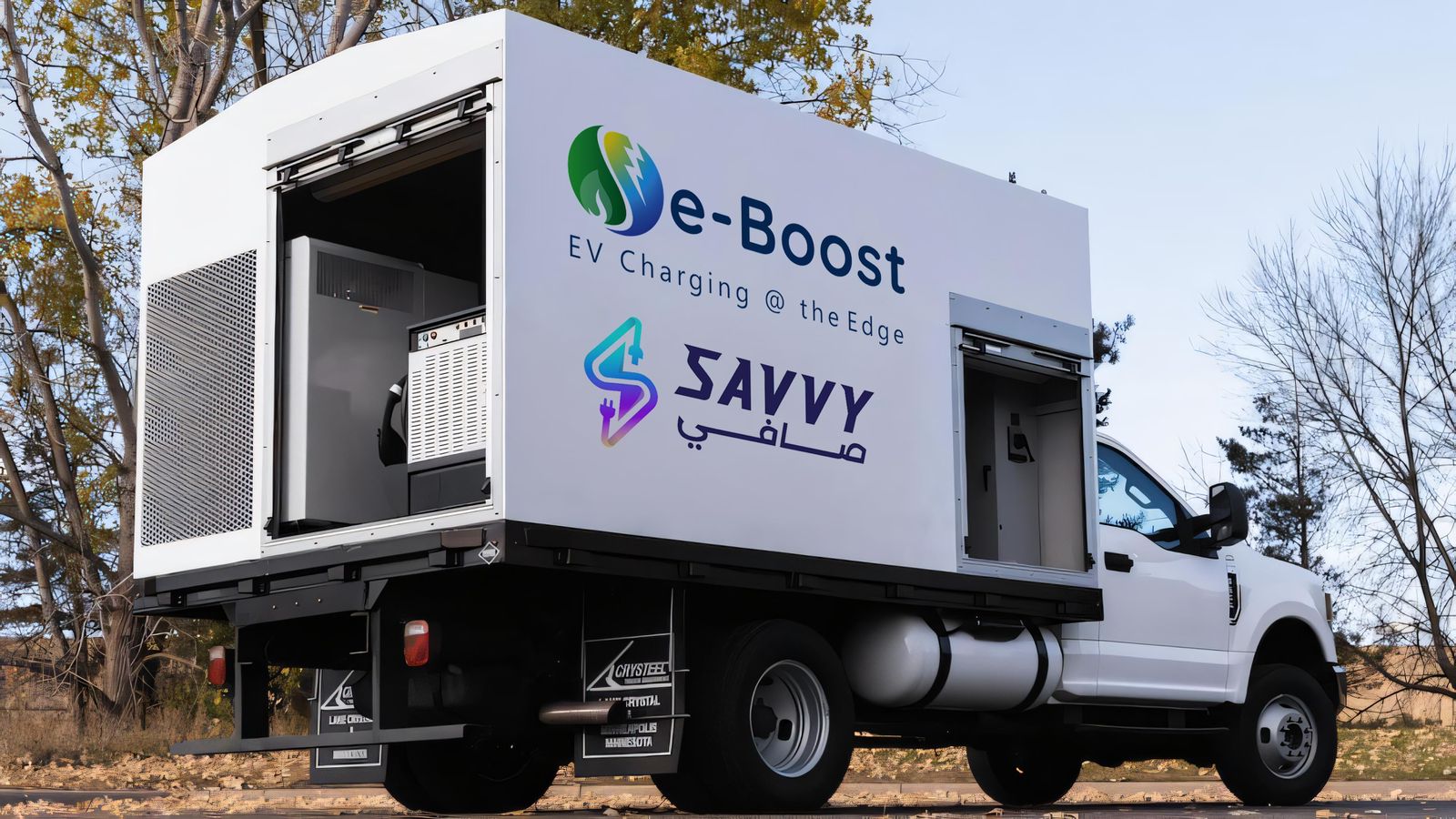
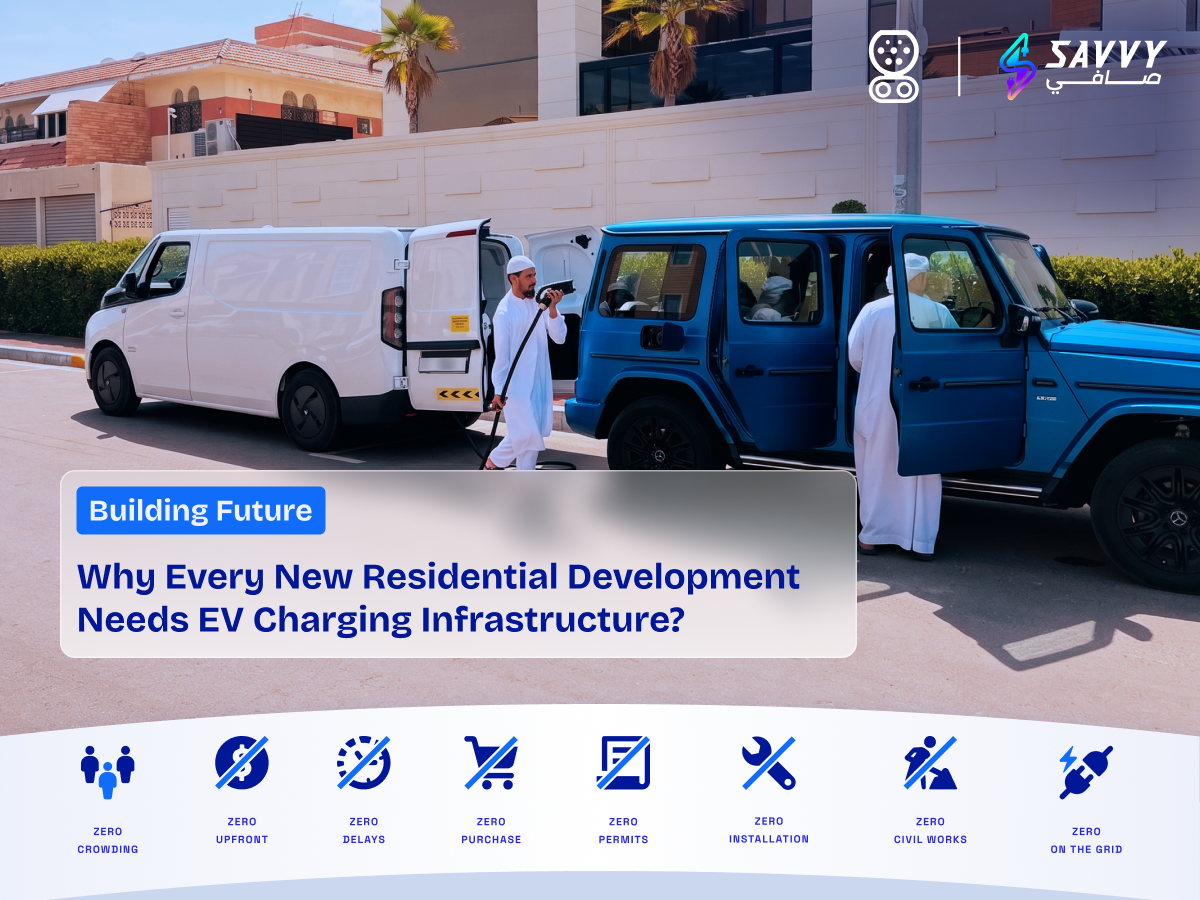
Savvy Energy is a UAE-based off-grid, on-demand EV charging operator offering mobile charging solutions. Through our mobile charging vans, we bring charging directly to vehicles without requiring drivers to travel to fixed charging stations.
Our Incognito Charging model provides additional charging flexibility for locations where permanent infrastructure is unavailable or difficult to implement.
- For new residential developments: Mobile charging can support residents and visitors while permanent charging facilities are being installed or commissioned. - For existing communities: It provides an alternative for residents who cannot access fixed charging infrastructure or are waiting for installation approvals and electrical upgrades.
We see mobile charging and permanent charging infrastructure as complementary solutions that can make EV charging more accessible across residential communities.
Building Future-Ready Residential Communities with Savvy Energy
EV charging is becoming an important part of modern residential infrastructure. For developers, the opportunity is to prepare for this transition before charging requirements become a challenge.
Planning electrical provisions during construction, managing future power demand and providing flexible charging access can help create more adaptable residential communities.
Savvy Energy supports this transition through mobile, off-grid EV charging solutions designed to bring charging directly to vehicles.
Whether you are developing a new villa community or managing an existing residential property, the right charging strategy can make a difference.
Explore EV charging solutions for your residential development at savvy.energy.
Frequently Asked Questions
1. Why should residential developments include EV charging infrastructure?
EV charging infrastructure provides residents with convenient charging access and prepares residential communities for increasing electric vehicle adoption.
2. Is EV charger installation mandatory in new UAE residential developments?
Requirements vary by emirate and applicable regulations. Developers should confirm the latest requirements with the relevant authorities.
3. Is it better to install EV chargers during construction?
Yes. Planning electrical capacity, cable pathways and charging locations during construction can reduce installation complexity and future modification costs.
4. What is an EV-ready residential community?
An EV-ready community has the electrical provisions, cable pathways and infrastructure planning needed to support current and future EV charging requirements.
5. What happens when multiple residents charge their vehicles simultaneously?
Simultaneous charging increases electricity demand. Smart load management can distribute available electrical capacity and help prevent excessive demand on the community's power supply.
6. What if a residential community does not have fixed EV chargers?
Mobile EV charging provides an alternative. Savvy Energy's mobile charging vans travel directly to vehicles, making charging accessible without requiring permanent charger installation.
7. What is mobile off-grid EV charging?
It is a charging solution that uses mobile charging units or vans to deliver electricity directly to electric vehicles, reducing dependence on fixed charging infrastructure.
Tags: ev charging, residential, real estate developers, uae, dubai, mobile ev charging, off-grid charging